
Earlier this year, we attended Adobe’s Jam Space: In Process — Evolving Design with AI and Beyond, and one thing was immediately clear: the conversation around AI in design has matured. This is no longer about novelty or fear. It’s about authorship, responsibility, and where human value lives when tools become exponentially powerful. As AI accelerates what’s possible, designers are being asked a deeper question: if anyone can generate, what actually differentiates meaningful design from noise?
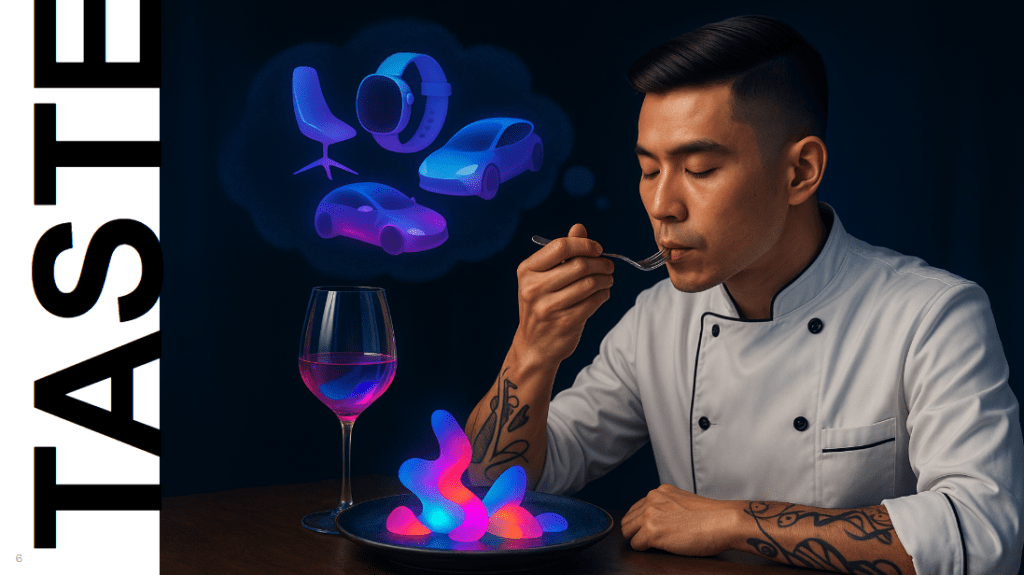
AI has made creativity universal. Images, concepts, and variations can be produced at a near-infinite scale. That abundance is impressive, but it also creates friction. When everything is possible, direction becomes the scarce resource. This is where taste becomes the edge. Not taste as style, but taste as discernment. The ability to decide what is appropriate, relevant, and worth pursuing within a real-world context.
Taste Is a Professional Skill, Not a Vibe
In design, taste is the combination of intuition, empathy, and judgment. Intuition is built through experience and repetition. Empathy comes from understanding how people actually use and feel about products. Judgment is the discipline of balancing constraints: brand, ergonomics, manufacturability, cost, and context. AI can generate endlessly, but it cannot weigh these trade-offs. Outputs are cheap. Outcomes require taste.
This distinction matters more now than ever. Design value is no longer about who can create the most artifacts. It’s about who can make the right decisions when faced with infinite options.
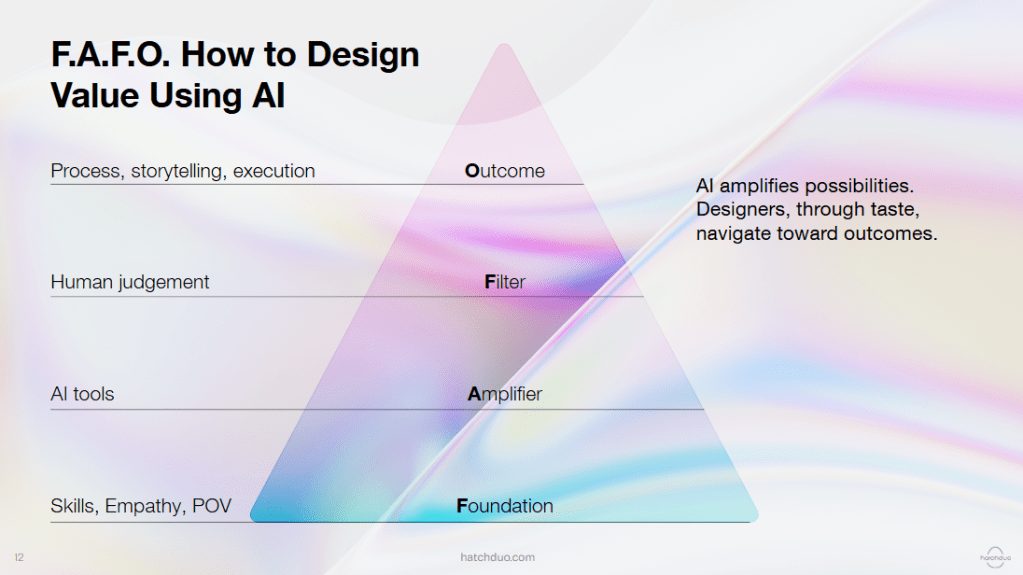
FAFO: How Designers Create Value with AI
We think about this through a simple framework: F.A.F.O — Foundation, Amplifier, Filter, Outcome.
- Foundation: Skills, empathy, and point of view. Your craft and lived experience form your taste palate.
- Amplifier: AI tools. AI expands the range of possibilities and accelerates exploration.
- Filter: Human judgment. Designers apply taste, culture, and context to decide what matters.
- Outcome: Process, storytelling, and execution that carry taste all the way to a shipped product.
AI amplifies possibilities. Designers, through taste, navigate toward outcomes. Without the filter, amplification becomes noise. Without the foundation, speed lacks direction.
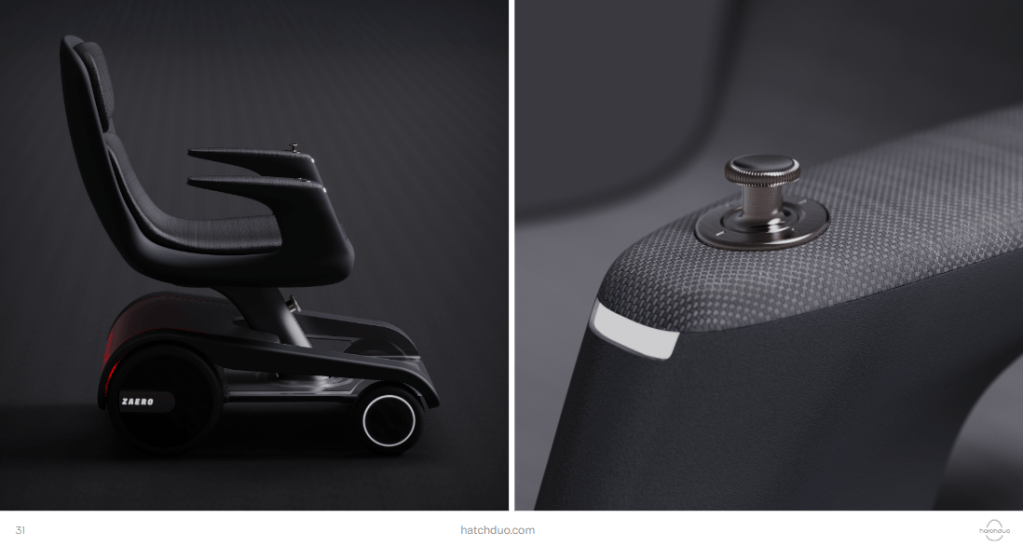
Turning AI Outputs into Real-World Products
At Hatch, AI literacy is mandatory, but taste is the standard. Tools like Midjourney, Vizcom, ChatGPT, and internal systems like theFLO.ai give us breadth and speed. They help us visualize faster, explore wider, and remove friction from the front end of the process. Designers curate tone, align brand intent, and apply feasibility filters AI cannot handle.
AI may suggest hundreds of directions. Designers decide which ones fit the brand, respect ergonomics, and can be manufactured. The value is not in generating more. It’s in knowing what to keep, what to refine, and what to discard. This lets teams spend less time searching and more time making strategic decisions that shape the final product.

Why Taste Is the Real Advantage in an AI World
AI does not understand context, culture, or appropriateness. It does not understand constraints unless humans define them. Trained designers do. Design has always been about nuance and trade-offs. AI hasn’t removed that responsibility. It has increased it.
As AI expands what’s possible, taste focuses those possibilities into clarity. It turns speed into substance. In an AI-driven world, taste is not optional. Taste is the edge.
Curious how you’re applying taste in an AI-driven workflow? Share your thoughts in the comments below.
DesignLeadership #AIInDesign #ProductDesign #DesignThinking #HumanCenteredDesign #DesignStrategy #IndustrialDesign
 The Hatchery